

 en
en
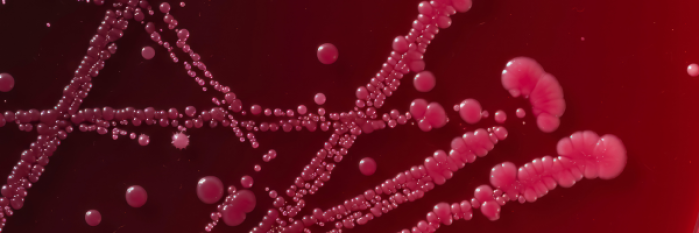
As part of our Clinical Anaerobic Bacteriology Webinar Series, we recently hosted a C. diff Deep Dive with Dr Michael Perry, Consultant Clinical Scientist at the UK Anaerobe Reference Unit (UKARU), Public Health Wales.
In this session, Dr Perry explored the current landscape of Clostridioides difficile infection (CDI), drawing on national surveillance data, laboratory diagnostics, and real-world outbreak investigations.
Key Topics Included:
- Why CDI rates are rising again across the UK, particularly in community settings
- The strengths and limitations of current diagnostic algorithms, and why CDI remains a clinical (rather than laboratory) diagnosis
- The growing role of nucleic acid amplification tests (NAATs) in improving specificity and case detection
- How whole genome sequencing (WGS) is transforming CDI typing, surveillance, and outbreak response
- Lessons learned from hypervirulent strains, including ribotype 955
- The importance of patient-centred approaches, prevention strategies, and support through initiatives such as the C. Diff Trust
Below, we expand on these themes in more detail for those who were unable to attend live, or who would like a consolidated technical overview of the session.
Setting the Context
Dr Perry is based at the UK Anaerobe Reference Unit (UKARU), part of Public Health Wales in Cardiff. UKARU has provided a national reference service for anaerobic bacteriology since the 1980s, delivering phenotypic identification, antimicrobial susceptibility testing, clinical advice, and research support.
His work focuses on molecular diagnostics and pathogen typing, with a particular emphasis on the application of whole genome sequencing to anaerobic pathogens, including C. difficile. He also chairs the Wales C. difficile Infection Working Group and is a trustee of the C. Diff Trust.
C. difficile: Background and Clinical Significance
Clostridioides difficile is ubiquitous in nature, especially prevalent in soil and can act as a gut commensal. Its presence in the gut is variable: higher carriage rates are reported in children, patients with cystic fibrosis, and animals. Its ability to form spores allows it to persist for prolonged periods in the environment and to resist many commonly used cleaning agents, making infection control particularly challenging in healthcare settings.
Certain ribotypes have been associated with more severe disease outbreaks. Historically, ribotype 027 caused large-scale outbreaks with high morbidity and mortality in the early 2000s. Other notable strains include ribotype 078, often discussed in a One Health context, and more recently ribotype 955, which has been linked to large outbreaks and reduced susceptibility to metronidazole.
Although rates of CDI fell significantly between 2010 and 2018, Dr Perry highlighted that reductions were largely confined to hospital-acquired infections. Community-associated cases did not decline to the same extent. Since 2018–19, Wales and the other UK nations have seen a renewed increase in CDI incidence, resulting in significant morbidity and healthcare service disruption, despite relatively low fatality rates. Encouragingly, early data from 2025–26 suggests potential “green shoots” of improvement.
Diagnosing C. difficile infection: Why Algorithms Matter
A central message of the session was that CDI remains a clinical diagnosis, supported (but not defined) by laboratory testing. No single diagnostic assay is sufficient in isolation.
Dr Perry reviewed current UK and European guidance, emphasising the importance of two- or three-step diagnostic algorithms that balance sensitivity and specificity. Common approaches include:
- GDH or nucleic acid amplification tests (NAATs) as an initial screen
- Follow-up toxin A/B enzyme immunoassays (EIAs) for increased specificity
NAATs offer high sensitivity and improved specificity compared to GDH alone, particularly by avoiding detection of non-toxigenic or toxin-variable strains. Data from Wales showed that introducing NAATs as a primary screening tool did not lead to the surge in positives that some laboratories feared. Instead, it reduced first-line positivity rates and improved identification of clinically relevant C. difficile excretors.
However, toxin-negative patients should not be ignored. Even in the absence of detectable toxin, colonised individuals can still shed spores and contribute to environmental contamination and onward transmission.
Dr Perry also highlighted the challenges of diagnosing CDI in the community, where selective testing can lead to missed cases, and noted emerging discussions around revisiting diagnostic assumptions in young children.
Typing and Surveillance: From Ribotyping to Whole Genome Sequencing
Historically, PCR ribotyping has been the mainstay of C. difficile typing in the UK and Europe, with PFGE and MLVA used in other settings. While these methods have been valuable, they interrogate relatively small portions of the genome.
Whole genome sequencing now enables analysis of approximately 80% of the C. difficile genome, offering far greater discriminatory power. In Wales, WGS is used to type around 90% of PCR- or GDH-positive isolates, with results shared via laboratory information systems, infection control platforms, and targeted alerts.
The benefits of WGS discussed in the webinar included:
- Confidently ruling transmission events in or out
- Detecting otherwise unrecognised or cryptic transmission
- Supporting rapid outbreak investigation and response
- Providing additional data on antimicrobial resistance and virulence determinants
Dr Perry outlined how WGS was instrumental in understanding the epidemiology of ribotype 955, enabling Wales to rapidly assess the scale of risk and respond proportionately through coordinated microbiology, infection prevention, and public health collaboration.
Prevention, Patient Impact, and the Role of the C. Diff Trust
The session also drew on insights from the Combatting CDI Conference, highlighting that while traditional healthcare-associated risk factors remain important, the rise in community-associated CDI requires renewed attention.
Key prevention themes included:
- Environmental cleaning and effective sporicidal disinfection
- Staff, patient, and carer hand hygiene
- Use of isolation wards and rolling hydrogen peroxide decontamination programmes
- The growing role of WGS-based surveillance across Europe
A particularly powerful part of the presentation focused on patient experience. CDI is not always a short-lived illness confined to elderly or hospitalised patients; it can follow a single course of antibiotics and have long-lasting physical and emotional consequences. This perspective underpins the work of the C. Diff Trust, which aims to support patients, carers, and healthcare professionals with clear, timely information and advocacy.
Key Takeaways
Dr Perry concluded with several clear messages:
- C. difficile remains a significant threat to patients and healthcare systems
- Diagnosis should always combine laboratory testing with clinical judgement
- NAAT-based algorithms offer important advantages when appropriately implemented
- Whole genome sequencing is becoming central to modern CDI surveillance and outbreak investigation
- Patients and healthcare professionals need better support to improve prevention and management across both hospital and community settings
Watch the Webinar On-Demand
If you missed the live session, or would like to revisit the discussion in full, watch the recorded C. diff Deep Dive webinar below.
For updates on future sessions in our Clinical Anaerobic Bacteriology Webinar Series, including March’s session led by Trefor Morris, please visit https://www.dwscientific.com/dwswebinars.




 England